Note: This transcript was auto generated then some poor soul sat and listened to it, and followed through correcting any mistakes they spotted. Please however expect human error and shout if you spot an issue. Email: lee [fancy curly symbol] trailblazer.fm.
Verbatim text
Lee:
Welcome to the Trailblazer FM podcast. This is your host, Lee. On today’s show, we have back again. It’s Mr. Philip VanDusen how are you, sir?
Philip:
Hey, Lee. Thanks for having me back on the show. I really appreciate it.
Lee:
I’m all right. Is it Phil or Philip? I can never remember.
Philip:
It doesn’t matter.
Lee:
Well, if people listen back, you just called me Haley.
Philip:
What?
Lee:
It’s an old joke. You just said Haley. I was like, No, that’s not my name.
Philip:
Oh, wow. Okay, look, we can’t get into the puns yet.
Lee:
No. Okay. Well, Well, obviously people will not know, but me and Phil are actually in a mastermind of which puns feature quite a lot, probably because most of us are over 30. Anyway, for those who don’t know you, Phil, could you please just give us a little potted bio of you, what you’re all about, what you do, where you’re from?
Philip:
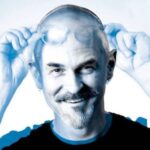
Sure. Well, we’re not in video, so people can’t see, but I’m an older guy. I have grey hair, grey beard. I’ve been in the industry for over 30 years. I’m a creative professional. I’ve spent my career managing creative professionals on both the global branding agency side, as well as with some couple of large global corporations, leading teams as small as three, as big as 65, working with some of the biggest brands in the world. In the last 10 years, I’ve started my own consultancy and built a little bit of a content empire through podcasting and my YouTube channel and helping small to medium-sized businesses, brand their businesses, but then also coaching entrepreneurs and creative professionals to get where they want to go in their careers and be inspired.
Lee:
Well, let’s go straight in for that. You’ve just said help people get where they want to go. I was reading on your website that people will often feel stuck. I can’t quite remember how you worded it, but I always remember this phrase where someone says, If you do the same thing over and over again and expect different results, then that’s the definition of insanity. You don’t say it like that, but it’s a very similar sentiment. When creatives do feel stuck, what does that usually look like in real life? What does stuck mean?
Philip:
Stuck can be taking an inordinate amount of time to make a decision, for one thing, not having the input that you need in order to inform a decision. Sometimes it’s feeling less than inspired or that you are retreading the same ground in the work that you’re doing over and over again. Sometimes it can feel just like loneliness or a disconnection from your industry. It’s really always very surprising to me how few creatives actually go to in-person conferences these days. And so many of us are working at home now. And so there’s a huge social disconnect piece of it, too, that I think really hamstrings people in their ability to be inspired, come up with new ideas, be exposed to new tools or techniques, things like that. It’s just, I think, a level of feeling stale.
Lee:
Feeling stale is the worst. Would you think as well for those… I mean, in my experience, a lot of it was procrastination as well. So never quite being able to get things done, even though it was clear what I had to So procrastination can be fear-based.
Philip:
It can be perfectionism-based. It can be just… I don’t want to say laziness, because I don’t think that most procrastination is laziness, actually. I find that most procrastination is either a lack of purpose, lack of clear goals, or goals that are so large that folks have a hard time breaking them down into the action steps so they’re going to get them to that goal. I think there’s also a lack of motivation. I think it’s more motivation than it is laziness. And accountability. I think that’s the other piece of it, is that if you don’t have a level of accountability to actually taking action and getting some momentum on where you would like to go, it’s hard to get rolling. And when you know that It’s like having a job. You got to report to your boss, right? You got to prove your productivity. If you’re working for yourself and you don’t have that oversight, sometimes it’s very difficult to get moving.
Lee:
You’re totally right. If you think back, though, so when most of us first started our business, be it was on our own as a solo creative, or be it a small business, small team, etc. We all very likely started with an absolute fire in our belly, and we were able to produce tonnes of work and onboard new clients, and it was exciting. This was going to be it forever. I found my forever job, et cetera. Fast forward a few years What do you think, out of everything that we’ve talked about so far, is the most common reason that people end up feeling stuck?
Philip:
I think you have to have great input to get great output. And input comes in a lot of different forms. Input for a creative person can come in the form of inspiration. It can come in the form of exposure to a new tool or a new way of going about what it is that you’re doing. And when we’re working for ourselves or we’re a few years into the industry, and as you say, we started off with a fire in our belly, and then you do the same projects over and over, and you start to get a bit of repetition in both your work product as well as how you are going about either working with clients or developing your products or services or whatever that is. Everything can become mundane. That’s why they call it work, right? Because it’s work to keep those gears moving. I think that that’s really one of the reasons why people have a tendency to stall out, as I think that there’s a lack of motivating input.
Lee:
Maybe throw a few. You said one. It feels like there’s some more in your mind that might lead people to feel stuck. What else have you got?
Philip:
I also think that with a lot of people, in creatives in particular, there’s a level of perfectionism. That that can hamstrung you. And it also hamstrings people from trying new things. There’s another thing I like to call the white canvas syndrome, which I was trained as a painter. I have my master’s in painting. I actually started off in the fine arts before went into design in the fashion industry. And when you’re painting, you have a big white canvas. And before you start, in your head, you may have all sorts of preconceptions or visualisations of what this thing is going to be. And you have goals and desires and perfectionist visions of this thing that you’re going to create. And that can be very intimidating to making that first to actually breaking the white surface of the canvas and getting started. But until you actually make a mark and put something up on the canvas, you don’t have something to react to, something to move you to the next step, something to build from. And so I think that’s another reason that people get stuck is that they may have this… They may set out a perfectionist-level goal for themselves and never be able to break the whiteness of the chemist, never be able to take that first step and put a mark down.
Philip:
Because until you do that, you have nothing to build from. All you have are things in your head. We all know that being in our heads too much is not the most productive thing.
Lee:
No, that’s true. My business partner is one of those people who will often send me a three-minute to eight-minute voicemail, voice message. I know that actually what he’s doing is he’s not really leaving me a message. He’s thinking something out loud because he can’t actually process it in his head. He’s got to just talk it out. By the end of it, he’s answered his own question, and I needn’t have listened to the entire eight minutes.
Philip:
Yeah, it’s like verbal journaling, and you’re allowing it. You’re using your business partner to bounce things off of.
Lee:
Yeah, that’s right. I resonate as well with that white canvas scenario there as well, and the fear, because I did art at school, and I always had that fear of making the first mark because I wanted the first the first mark to even be perfect, be it perspective I was going to do, because one of my One of my favourite things was to do landscapes, but with buildings that would go into the distance, etc. I always wanted my first marks to be perfect. I would put that much pressure on myself that I just wouldn’t do anything. I would just stare at the blank piece of paper. It wasn’t canvas to me. This was drawing and then doing water colours. You’re right, though, being able to put something on the paper and then react to it and evolve it is actually a very powerful metaphor for what we can continue to do as what we’re doing in business, et cetera.
Philip:
I think I’m going to continue that metaphor and just circle back to what we were talking about previously about feeling stuck. I think that that’s also in terms of That metaphor, a part of that creative process, because when you do get over that hurl, you make that first mark. The first few marks are always very exciting. It’s all full of possibilities. Then as you work into it, sometimes you fall into what I like to call the messy middle, which is where things are just a mess and they’re not gelling yet, and it can be very frustrating. Then as you push and work through that and push and pull with what it is that you’re playing with, eventually the idea will start to gel and things start to become something. But it’s that messy middle part that a lot of creative folks don’t really acknowledge or honour as part of the process. And knowing that that comes with the territory, you don’t jump from exciting first mark to finish beautiful product. It doesn’t happen that way. There is a messy middle involved in our businesses, in our careers. There’s a piece of that that we have to acknowledge, honour, and really believe is part of the process.
Philip:
And it’s a tough thing to do. It’s a really tough thing to do. A lot of people get completely paralysed by it.
Lee:
I think for the developers listening as well, just let’s highlight that word creative. A lot of developers don’t feel they’re creative, but the messy middle is something that even developers will resonate with because we have the idea, we’ve got the brief for the product that we’re making. Say we’re building a WordPress plugin, for example, and we get started, we start laying it out, we start designing the database, whatever we’re doing. But then we get to that messy middle where you’ve really got to work out how it works. You’ve got to work several things together. Halfway through, you change your mind about how you want to do it. So you have to roll back a whole lot of stuff which can get frustrating. And then you find yourself in this spaghetti code area where you’re not sure quite which direction to go in, et cetera. That messy middle is very much there, and it can absolutely rob you of the joy of that project in that moment when you’re just so frustrated. You started off so well. Everything was really clean, and now you have this messy code with tonnes of comments. Multiple comments in GitHub, and multiple reverts, and it loses that excitement and that buzz.
Lee:
Then eventually, you get to the other side of that, and then you’re back into the zone again. This product is flying. It works. It does the thing. When the client start testing it, then you get that feeling of yes, because the clients are actually loving it, using it, and it actually works. Again, like you said, that messy middle happens in business. Let’s talk about the messy middle then. How do people get back on track when they feel stuck in the messy middle of business?
Philip:
Well, when you’re building a business, I think that there is, like you said, number one, circling back, you’re aligning the messy middle of the creative process. So the idea of being a creative to coders and developers is totally spot on. I mean, I completely believe that. There’s a lot of people who are in engineering, who are in architecture, who are entrepreneurs, who a lot of what we do in business and in developing products, whether those digital products or websites or whatever, are creative endeavours. And it’s that arc of the creative process that people who don’t initially consider themselves, quote unquote, creatives don’t really understand that there’s that arc of the process. I love how you characterise that. Good on you.
Lee:
Good on me.
Philip:
Yes, absolutely. I think that in business, the messy metal can look like you’ve built really fast or you’ve hired a lot of team members, or you’ve thrown up a website and some ideas of what your products and services are. Then either the team gets bloated and suddenly there’s a lot of people trying to do things, but you haven’t established real clear systems or real clear decision making trees or real clear Racy, which is like who’s responsible, who’s accountable, who’s consulted, who’s informed, how does all of this stuff happen? And then you’re instituting new tools are coming into the process. You’re using new SaaS products, and the thing just becomes a messy rats nest and a bunch of spaghetti. And You layer on top of that a founder who is an ideas person and coming up with a font of new ideas all the time and dropping in handgranades of new things that they want to try or new things they want to do or new functionality they want to add, and it becomes chaotic. It’s sorting through that spaghetti and creating some structure to this because everyone loves the initial explosion of ideas. Everyone loves the startup.
Philip:
But when it comes time to actually do the business day to day, year on year, you got to get down to systems, you got to get down to some process, you have to establish some hierarchy, some decision making. Not everybody’s opinion is equally weighted in the development process. I think that messy middle in business, just like in the creative process, has a lot of the same characteristics. Then once we start instituting processes, once we create some hierarchy in how decisions are made, once we establish a timeline for a new product or new service development, once we start to figure out what the verticals, what’s the architecture of our business, what is that going to look like, how are we going to plan to scale? And all of those things are when things, to my point of view anyway, start to gel. And a lot of times, businesses need consultants like myself or like yourself to come in and help them straighten that spaghetti. I use that phrase because that’s actually what a client told me once. She said, I love working with you because you’re my spaghetti straightener. No way. She was like one of those incredibly energetic founders who had a brilliant idea, a great business, but she She had so many ideas that she would lob like handgranates into her team, that she was constantly creating chaos, and she just didn’t realise it.
Philip:
She thought that she was being brilliant. But what she was doing was she was really hamstrung herself, and she couldn’t see her way through it. She was constantly getting in the bowl and mixing the spaghetti up by herself, but she didn’t really have the ability to back up and get perspective on it.
Lee:
Would I just want to apologise to any Italians listening. No spaghetti has been harmed in any advice ever given by Phil or by this podcast. No, that’s so true. Often, I think people get… They don’t like the idea of bringing in a consultant because they will often think, Well, I know what they’re going to say. Because most of us Most of us know the answers. Why is it, though, that we devalue, as it were, an external consultant coming in in that manner?
Philip:
Well, it’s funny. When you were just talking about your partner leaving you an eight-minute voicemail and that they were essentially hearing themselves talk, but they knew they were recording in their own head. So they were processing their thoughts and ideas, ostensibly with the idea of sending it to you. But essentially, they were just hearing themselves talk and working through that problem on their own. But it was the idea of that other, that other person that they were talking to that helped them straighten their own spaghetti. I think that that’s a really, really key point in all this. That’s the way coaches operate. That’s the way psychologists and therapists operate. There’s something I can’t remember where I read it. It was in some management book somewhere, but it was called The Great Coaches and Consultants in the World. It’s like It’s the lamppost concept. If you have a drunk guy and he’s like, wandering around, trying to find his way home from the pub, and he bumps into a lamppost and he’s so out there, he starts having a conversation hanging onto the lamppost. And he’s working his way through the problem because he’s just talking to this thing.
Philip:
And that’s in many ways what consultants and therapists and coaches do. They act as that lamp post. They act as a mirror. They reflect back and and they help you discover your own answers. And that to me, because I do both coaching and consulting, coaching is really helping somebody find their own answer. Consulting, on the other hand, is that you bring that aspect to it, but you’re also providing them with the answers, with your expertise, which is why you’re coming in as an outside entity, but with some power to drive some decision making.
Lee:
Well, and that’s That’s actually a really good distinction, I think as well, because there are times you’re going to be coming in and saying, Okay, these are the processes that you need to apply to your business in order to be able to deliver more efficiently, et cetera. People don’t necessarily know those answers. There’s two areas then, isn’t there? There’s the stuff you know, but you can’t process. Then there is also the stuff that you don’t know. There’s those two camps.
Philip:
As a consultant, also, you’re helping figure out what is broken, because a lot of times when they come to you, they don’t really understand what’s broken. They may realise they need processes or systems. But then there’s a level of confusion in just being able to understand where it’s broken and what the thing is that needs to be “band-aided”.
Lee:
Like throwing those idea grenades in. Yes. Again, I can resonate there because my business partner is very much an ideas guy, and he likes to have the ideas, and then they come into my camp where I then have to build these ideas or do something with them, et cetera. The problem is, is he can have an idea a day if we’re not careful. We have this acknowledgement now for the last few years where we ask each other, are we going down a rabbit hole? If we both recognise we are going down a rabbit hole, we’re like, great, let’s just pop this in an ever-growing document and forget about it for now because we need to get this XYZ finished for a particular client. It was free advice from me.
Philip:
Yes, and that’s an absolutely perfect process.
Lee:
Thank you. Now, you have Bonfire, and I’ve heard you talk about it quite often. You’ve developed a community of people that you get on really, really well with. What have you learned about what actually helps people through the interactions you’ve had there?
Philip:
Sure. Well, the Bonfire name actually comes from From a story that when you have a log that’s on fire and you bring other logs or sticks or pieces of kindling close to it, they can’t help but catch fire. And that’s very much what the concept of bonfire is about, is that if you get a group of people who are motivated, interested, working on their businesses, and you bring them close together, that that fire is contagious. And And when I went from corporate, I was vice president of design at PepsiCo, and I had a massive burnout. And I left the biggest job of my career and started… I didn’t know whether I even liked design anymore. I was over it, and I needed some time off. And I basically decided I didn’t want to work with the Fortune 100 anymore. I wanted to work with small clients where I could really make an impact. And But when I started off on my own, I was suddenly like a babe in the woods. I was like that dog in front of a computer that says, I have no idea what I’m doing. That’s like what my life was.
Philip:
I didn’t know how to get clients. I didn’t know anything about personal branding or newsletters or podcasts or YouTube channels or content marketing. I mean, I knew nothing. I knew a lot about branding Chevron, but I didn’t know anything about branding myself. I joined a mastermind group, and It was a fairly large group run by a very charismatic person. I met a whole lot of people in that group who were building personal brands and content and individual, personal brand-driven businesses and consultancy. And through that community, I was, a) motivated. I learned a tremendous amount what was even possible that I had no idea about. I was watching people who were 5, 10, 20 steps ahead of me do the things that I wanted to do and get the results that I knew that I wanted to get. And I learned at such an accelerated rate. If I had just stayed at my home office and surf the internet and tried to figure all this shit out myself, it would have taken me a decade. And in six months of being in this group and really participating, I developed a newsletter. I started building an email list.
Philip:
I had started a YouTube channel. Within a year after that, 85 % of my clients were coming to me directly from the content I was doing on YouTube. And so this mastermind community that I was part of added absolute rocket fuel to this new chapter, this new pivoted chapter of my life. And I became an absolute convert in that process. I’ve We’ve also seen it happen on the corporate and agency side when new creatives have joined a creative team and that they then are exposed to all the other creatives in the group, and they find incredible amounts of motivation there. And the other piece of it is accountability. In a job setting, it’s easy to have accountability. But when you work for yourself, getting that accountability to the goals that you set for yourself is hard. But if you’ve put yourself in a mastermind community or some setting where you’re voicing your goals, your goals are being inspired by the other people around you, and then you are held accountable to those goals or making progress on those goals by the other people in that community. It can move you forward so much faster. And so I started a community.
Philip:
First of all, I started a series of masterminds that were just 12 weeks long, and they were limited to ten people. And they were super successful, but launching and filling those groups in this succession was very laborious. And so I ended up deciding that I was going to have more of a subscription-based ongoing community. So I started Bonfire, and it’s for mid-career, mid to late career creative professionals who are looking to build their businesses and their personal brands. And it’s a really cool, very vibrant group. And we meet once a week on Zoom, either in mastermind hot seat coaching or group coaching sessions, or we sometimes have visiting experts come in and present to the group. Sometimes we do inspiration sessions. Sometimes we do office hours where it’s just anyone can come in and pick my brain if they want to or want some direct one-on-one coaching. It’s just an amazing experience. I couldn’t I can promote the idea of becoming involved in some a mastermind higher. You and I are in a mastermind together. I’m also in another colleague-level mastermind that I’ve been in for over nine years. Both of those things have enabled me to really get to know deeply a number of other really super talented people who make me up my game every single day.
Lee:
I’d like to add to that then, because in 2023, I had a massive breakdown, to end of 2023. Big burnout, fell out of love with nearly everything, with word depressed with development, with design, with business. I even started looking for a job at one point. I was just like, I just need to escape. For me, one of the big catalysts for change has been part of the mastermind that you and I are a part of because I joined, I don’t know, maybe a year ago now, and when I first shared with you all, I was just sharing this feeling of flat and directionless and not sure where to go. How was that? Like dry stick you mentioned. I’m back. I’m on fire. The podcast has been relaunched, which is phenomenal, and it’s on my terms. In fact, I shared with you guys, didn’t I? Before I started launching the podcast again, these are my new rules of engagement. This is why I’m doing it, and I’m excited by it again. That’s because I’ve caught that fire from you folks in our wonderful mastermind. Hopefully, I’ve also then continued to feed my own renewed passion and zeal and helped feed the rest of our group as well.
Lee:
I am one who will definitely recommend, if you are not part of any Mastermind or group, consider Bonfire or something local to be a part of and to catch hold of that spark and that energy. Mate, we are pretty much coming into land, and I think I know what you’re going to say, but you might surprise me. What’s one small step that somebody can take today, maybe who is feeling stuck or sparkless, to help How does that system move forward?
Philip:
One step. I think that becoming an active part of some community, you know I would say mastermind, of course, but that That can be a financial investment. That can also be a big step for some people. But I think that a lot of people have a tendency to be lurkers. We lurk on a Reddit board or we lurk on some other LinkedIn platform or forum. We may post a comment or a like here and there, but we’re not really active. We’re not really engaging. And so what I would say is, pick one platform, one forum, one group, and start really engaging in it. Answer other people’s questions in a meaningful way. Ask questions that are important questions that you need feedback on, and ask for perspectives. And true engagement is what’s going to give you the perspective that you need to move forward faster. And I would see that as being a baby step into a more dedicated engagement like a mastermind group. Pick a platform, pick a forum that has to do with your industry, that has people who are inspiring you, and really engage in it in a different way.
Lee:
That’s fascinating as well that you would say engage in a different way because people often assume that you are going to go and join a group in order to answer a few questions and therefore generate leads. But you’re not talking about that whatsoever. What you’re talking about here is showing up, adding value, and also asking questions to get value because your role in that online group or community that you’re going to dedicate your time and attention to, your focus there is actually to rekindle or catch again some of that fire and build some new friendships, which I think gives people that permission to show up in those groups more, as opposed to showing up thinking, How am I going to work this into a lead? Which hamstrings you instantly. You’re just showing up because you’re saying, All I need to catch the fire that these folks have got, so I’m going to join whatever, Facebook group, forum, Reddit thread, comment on a very popular video on YouTube because I know some of those blow up sometimes as well, start to get to know some of these people, etc. The other thing as well in WordPress is there are local WordPress meetup’s all around the world.
Lee:
Do go ahead. I’ll put a link to the main website and you can go and find a WordPress meet-up where you can just be in a room with people who have a common interest, which I think is another great first step if you want to venture beyond the home and beyond the keyboard.
Philip:
The one thing I want to echo what you just said because it’s a very, very important point, which is when I joined that first mastermind group, the first thing I did was went in and said, I’m an expert in branding. If you want a free audit of your website or your branding, or you want some perspective, hit me up and I’ll do it for free. And a lot of people took me up on that. And it was a way to get myself known in the community. I gave, gave, gave value with no expectation of return to become an active part of that group. And over time, I actually ended up getting some business from that, but that wasn’t my intention. I think that if you do show up in some a community in that way, that’s the mindset you have to have, is you want to offer some free help, some free value to people, and give, give, give before you ask. Eventually, that altruistic approach will return benefits for you.
Lee:
I’m going to Google altruistic after this because I can’t remember what it means.
Philip:
I’m hoping I’m using that word in the right way.
Lee:
I think I get your point, but sometimes people use big words on me. I’m like, yes.
Philip:
Sometimes I do that to myself and I’m like, Did I just use that? Did I use that?
Lee:
I have a burning non-professional question. Do you like Coca-Cola or Pepsi best?
Philip:
Here’s the thing. When I joined Pepsi, I was a Diet Coke person. No way. I had never really tasted Pepsi. But then suddenly I’m in PepsiCo’s offices and you cannot drink anything that’s not a Pepsi product. I imagine. I had to try Diet Pepsi, and I was blown away. Diet Pepsi tastes like Pepsi. Diet Coke tastes like-Pepsi Max is even better.
Lee:
Do you have Is it Pepsi Max out there?
Philip:
I don’t know. It’s like the Coke Zero.
Lee:
Probably. It’s meant to taste exactly like Pepsi, and they call it Pepsi Max.
Philip:
Here in the UK- Diet Pepsi takes Pepsi, really, it does. But Diet Coke tastes like chemicals. I have a sister-in-law who’s absolutely addicted to Diet Coke. She will not give it up. But when I taste a Diet Pepsi, I was like, Oh, my God, I’ve been drinking the wrong diet soda my whole life. And so I am a Pepsi person.
Lee:
Me too, mate. Yeah. Not quite the logo, but that’s a whole different podcast.
Philip:
Yeah, that is a whole different podcast.
Lee:
Phil, what’s the best way for people to connect with you? And then we shall say goodbye.
Philip:
Sure. If you go to philipvandusen.com And I prefer you to go to philipvandusen.com/bonfire and check out a little bit more about what Bonfire is about. But everything I do, links to my YouTube channel, my newsletter, my podcast, etc, are on philipvandusen.com.
Lee:
Phil, thank you so much, folks. All links will be in the show notes. Phil, mate, have a fantastic day and thank you so much for being with me.
Philip:
Thanks, Lee. This was fun. Bye.